The army gives you back your Sundays all at once when you retire. Fifty-two years old, thirty-one in uniform, and suddenly my calendar was a parade ground with nobody on it.
My son suggested a package tour. I have jumped from aircraft; I was not going to be herded around Shimla with a lanyard. A friend from my unit, a Kinnauri, said: walk the Pin Bhaba. You start in my green country and finish in the moon's. You will meet both your selves on the way.
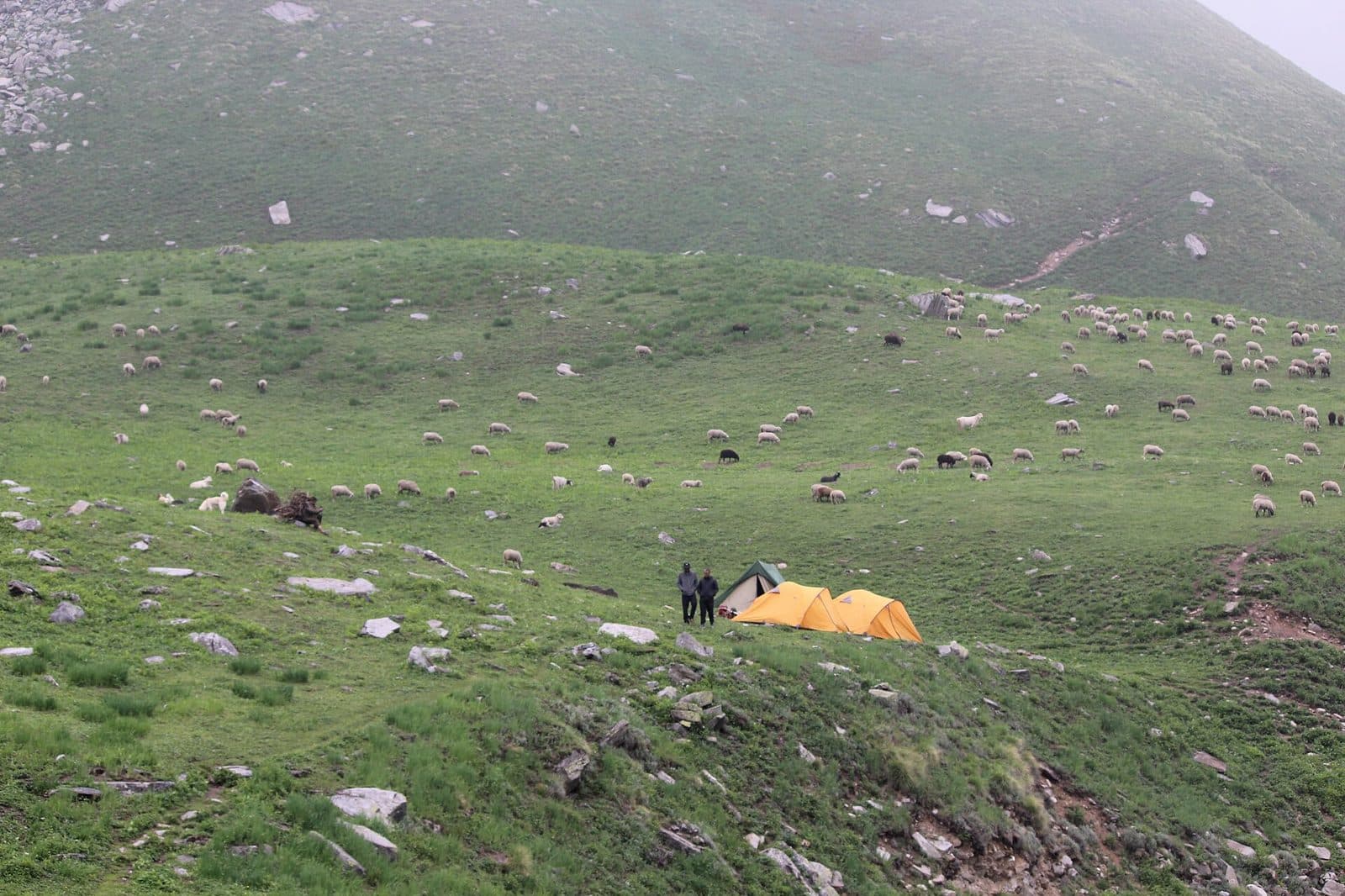
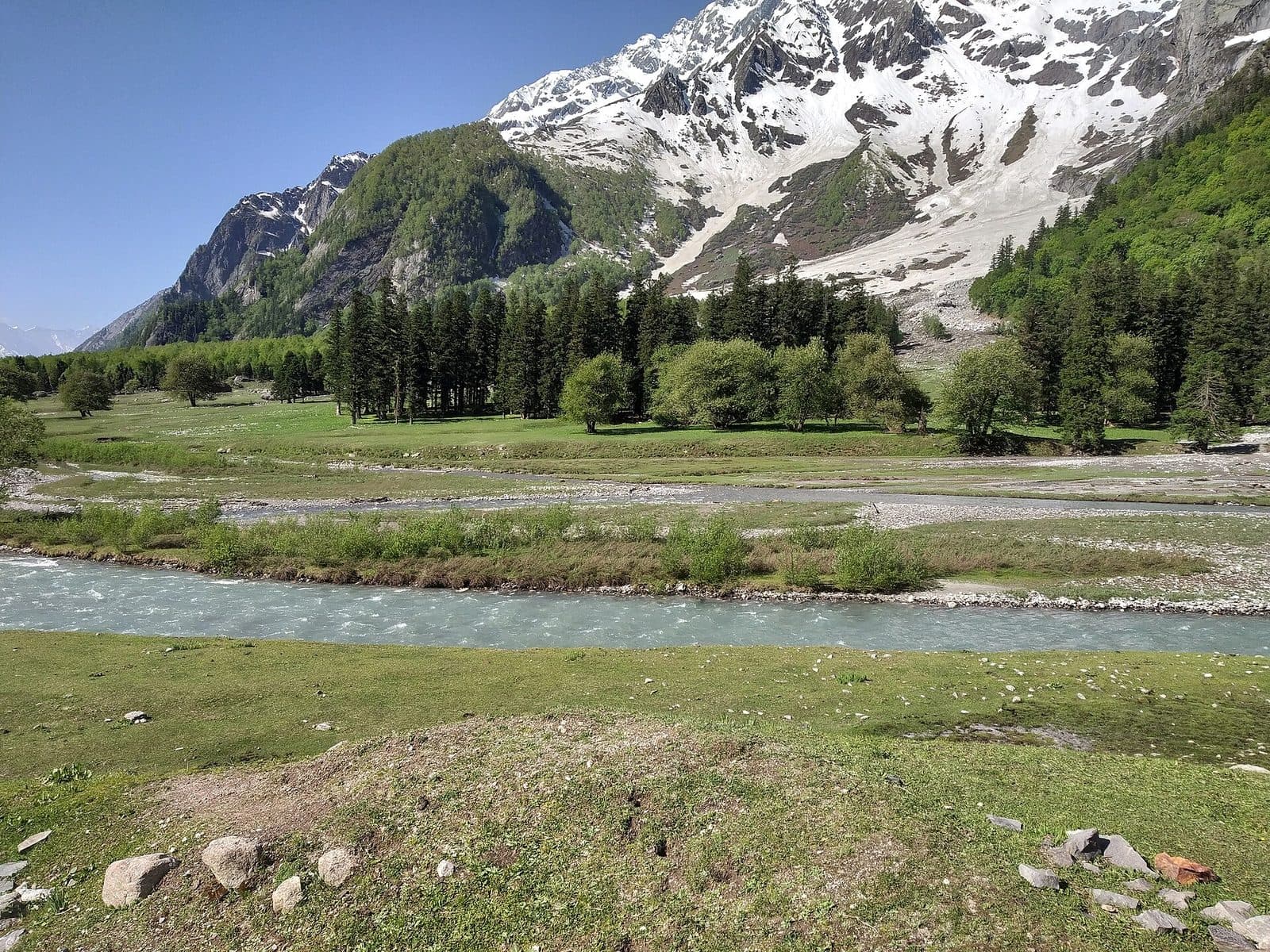
The Bhaba valley from Kafnu is the greenest thing I have seen in four decades of postings: waterfalls stitched down every slope, meadows at Mulling and Kara so complete they looked furnished, shepherds moving flocks with two words and one dog doing the work of a whole platoon. I walked with a local team, young boys who called me sir until the second camp and bhai-ji after it, which was the correct promotion.
Past Phustirang the green surrenders. The pass day started at four, headlamps and count-your-steps, wind coming over the crest like an inspection. At the top, nearly 4,900 metres, I turned around. Behind: emerald, waterfall country, everything soft. Ahead: Spiti, bare bone and ochre, ridge lines like folded khaki to the horizon. One step wide, that border. No wire, no post, no papers. The cleanest crossing of my life.
We came down into the Pin's silence, and I want to describe that silence properly: it is not the absence of orders. It is the presence of something that never needed any. By Mudh village, with its barley fields and butter lamps, I had stopped reaching for my phantom uniform. The prayer flags there do their duty in wind, unsupervised, around the clock. Good soldiers.
In the homestay the grandmother asked what I did. Retired, I said, testing the word. She poured thukpa and said the mountains are also retired, and look how busy they keep.
I walk every day now, in the low hills near home. But twice a year I go somewhere the map goes quiet. A man should regularly visit country that has never heard of his rank.