

Jalori Lake Trek
Short and generous, the trail finds a lake that likes to listen.
A circle of water tucked into quiet hills.
The Journey
A lake with its own housekeeper. That is what they told us at the pass, and we walked an hour and a half to check.
From Jalori the path never really climbs. It rolls along a ridge of old kharsu oak, trees with bark like elephant skin, and the forest floor is so soft your footsteps stop sounding like arrivals.
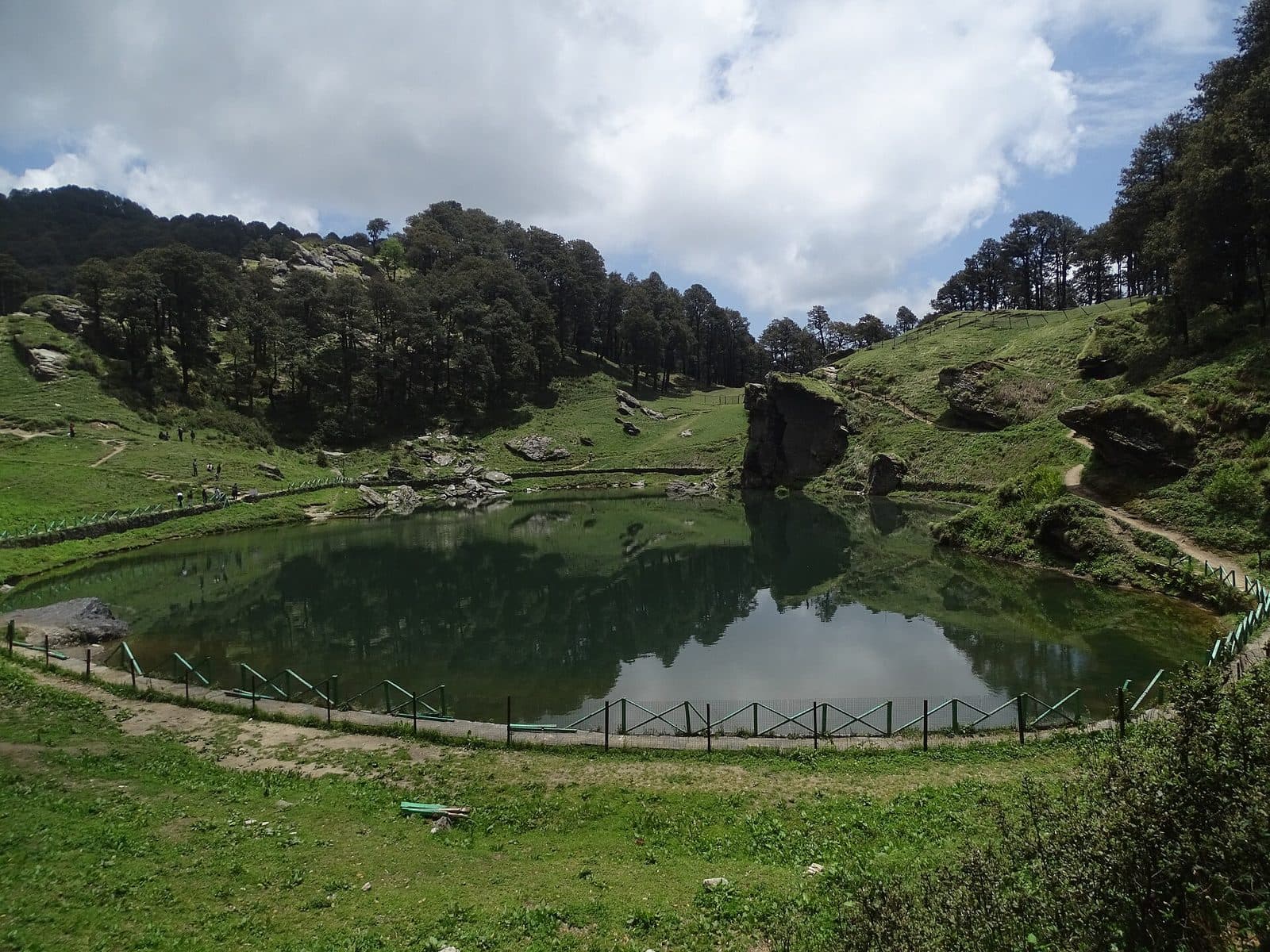
Serolsar, when it comes, is small, dark, and perfectly kept. Not one leaf on the surface. The story says a bird called the aabi lifts each leaf out the moment it falls, keeping the water clean for Budhi Nagin, the old serpent goddess whose temple sits at the shore like a patient grandmother.
We watched for the bird. A leaf fell. I will not tell you what happened, because the not-knowing is doing good work in me still.
A family from Ani was circling the lake with folded hands, and their small daughter ran the circle twice more for pleasure, which the goddess, I think, prefers.
Chai at the pass afterwards, thick with sugar, while cloud came up the Shimla side like slow applause.
Local truth: circle the water clockwise, keep your shoes on the path side, and do not throw anything in, not coins, not wishes. This lake's economy is leaves, and it is balanced.
Any clear day April to November. Add the half-hour climb to Raghupur's fort meadow if the sky is honest. Take your wrappers home.
Somewhere a bird keeps a whole lake clean, one leaf at a time. It felt less like a legend and more like an instruction.
Practical Information
Reach Banjar via Aut (on the Delhi–Manali highway), then drive up through Jibhi and Shoja to Jalori Pass; the last kilometres are steep and narrow. Buses and shared taxis run from Banjar in season. The lake trail starts beside the pass temple and stays on the ridge the whole way.
Questions Yatris Ask




“Tend one small thing completely. The bird does not clean every lake. It cleans its lake.”
Walk this chapter with awareness
Jalori Pass is a living landscape of villages, shrines, forests, and weather that turns quickly. Move softly, ask before you photograph faces or temples, support local homes, and carry back everything you carry in. The mountain remembers a respectful guest.
Read the Yatri CodeThe Himalayas are not asking to be visited.They ask to be understood.
Learn the trail, its people, and its silences before you set out, then walk this chapter with awareness.