

Parashar Lake Trek
Cedar paths to a high lake that keeps a floating island. Simple, beautiful, remembered.
A temple by water; a day by reverence.
The Journey
Nobody warned me that the island moves.
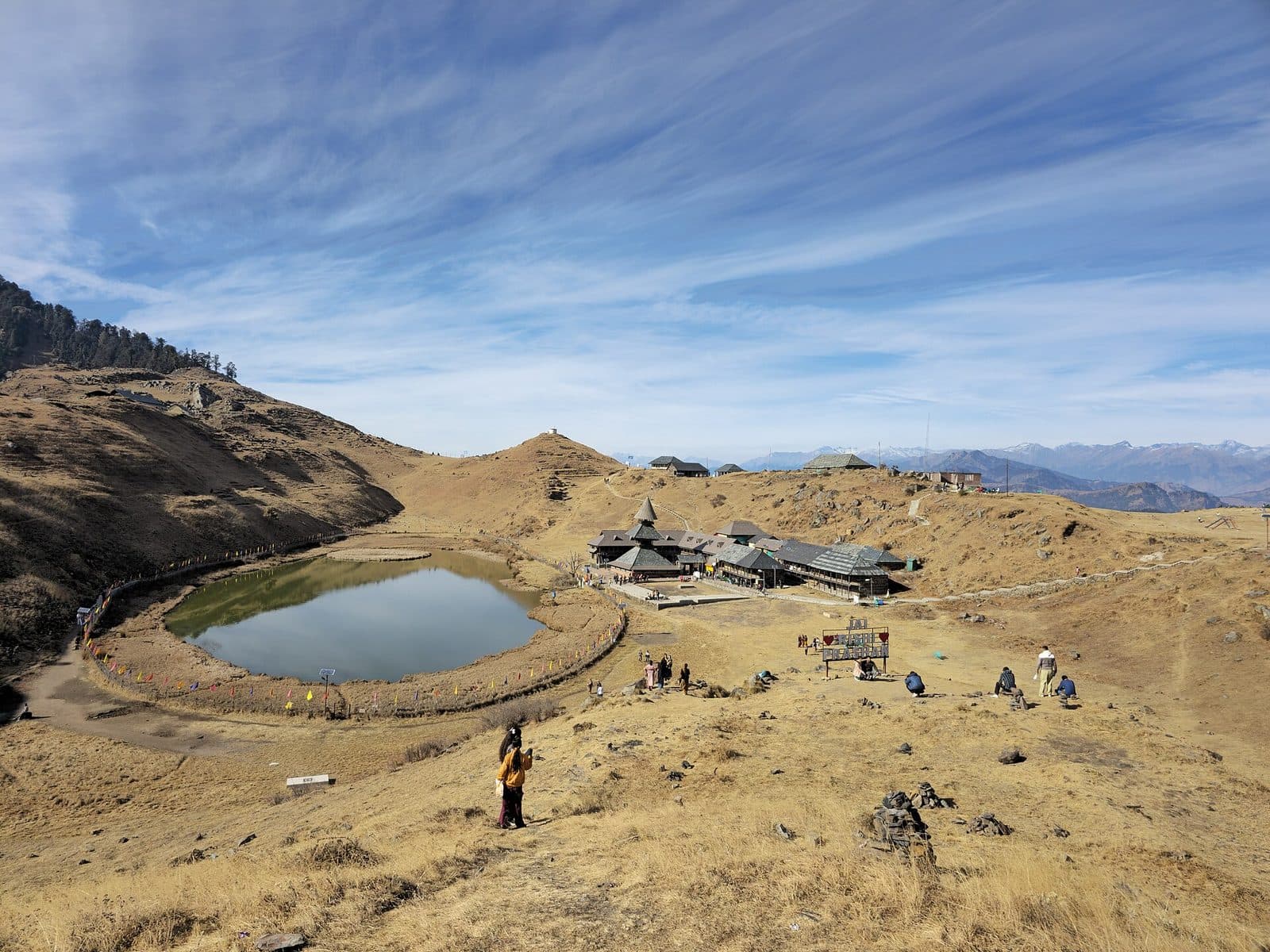
We had climbed three hours through cedar shade above Baggi, talking less with every switchback, and when the meadow finally opened there it was: a round green raft of earth drifting on dark water, slow as a thought you are not ready to finish.
An old man was circling the lake with a brass pot. He told us the island visits every corner of the water in a year, and that no one has ever found the lake's bottom. He said it the way you say the time of day, then went back to his round.
The temple leans over its own reflection, three storeys of deodar carved centuries ago for the sage Parashar. Inside it smells of oil, wool and cold stone. A priest waved us in, marked our foreheads, asked which village we were from. Delhi felt like a strange answer to give a place like this.
We ate maggi and drank chai at the one stall, and the wind kept rearranging the meadow grass like a hand smoothing a bedsheet. I had planned to take photographs. Mostly I sat.
Local truth: people here don't say the lake is beautiful. They say it is awake. You will find yourself lowering your voice without deciding to.
Come in March for snow at the edges or October for glass-clear sky, walk up instead of driving if your legs allow it, and circle the water the way the old man does: clockwise, unhurried, empty-handed.
I came to see a lake. I left having been seen by one.
Practical Information
Nearest airport: Bhuntar (Kullu), about 60–70 km away. Nearest major railhead: Chandigarh; the narrow-gauge line also reaches Joginder Nagar. Most Yatris reach Mandi town first (well connected by road from Delhi, Chandigarh, and Manali). From Mandi, it is roughly 49 km by road to the lake via Baggi village. You can trek the final stretch from Baggi (about 9 km, 3–4 hours) or continue by vehicle on the motorable road to near the lake when conditions allow. We confirm the exact pickup point and timing once your application is accepted.
Questions Yatris Ask
Related Chapters
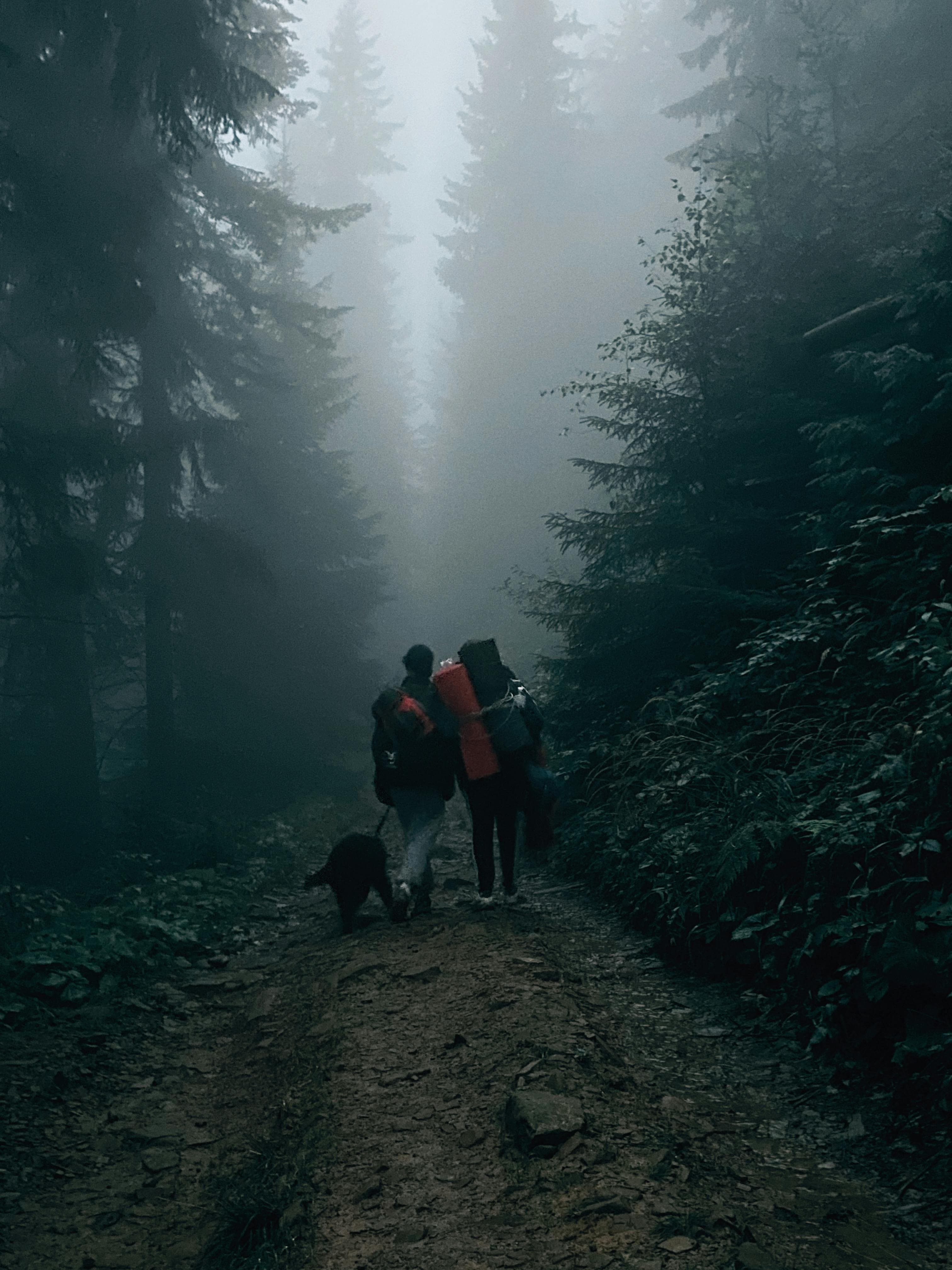
Kamrunag – The Lake of Oaths
A high lake in Mandi where gold, silver and coins have been offered for generations and never taken back out. What the offerings mean, what the new road changed, and how to stand at that water without getting in the way.

Chandernahan Lake Trek
Snow basins and long light. The climb is patient; the view is a careful kindness.
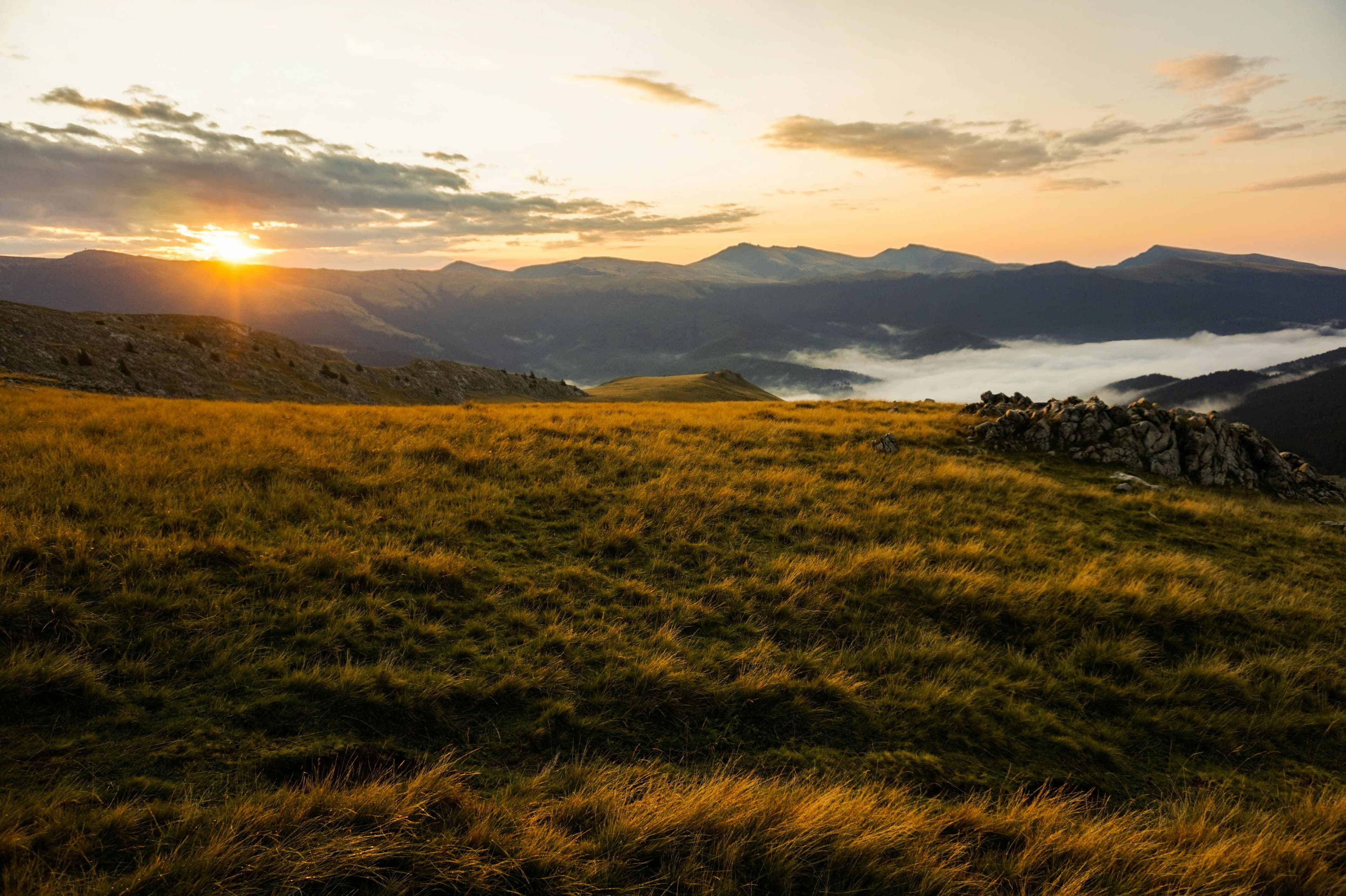
Himachal Temple Etiquette
Footwear, photography, dress, and what to do when a devta's palki meets you on the trail. How to enter a Himachali temple as a guest, not an audience.
Related Places
Kamrunag – The Lake of Oaths
A high lake in Mandi where gold, silver and coins have been offered for generations and never taken back out. What the offerings mean, what the new road changed, and how to stand at that water without getting in the way.
Chandernahan Lake Trek
Snow basins and long light. The climb is patient; the view is a careful kindness.
Himachal Temple Etiquette
Footwear, photography, dress, and what to do when a devta's palki meets you on the trail. How to enter a Himachali temple as a guest, not an audience.


“The island drifts all year, and still it is never lost. Learn from it.”
Walk this chapter with awareness
Mandi, Himachal Pradesh is a living landscape of villages, shrines, forests, and weather that turns quickly. Move softly, ask before you photograph faces or temples, support local homes, and carry back everything you carry in. The mountain remembers a respectful guest.
Read the Yatri CodeThe Himalayas are not asking to be visited.They ask to be understood.
Learn the trail, its people, and its silences before you set out, then walk this chapter with awareness.