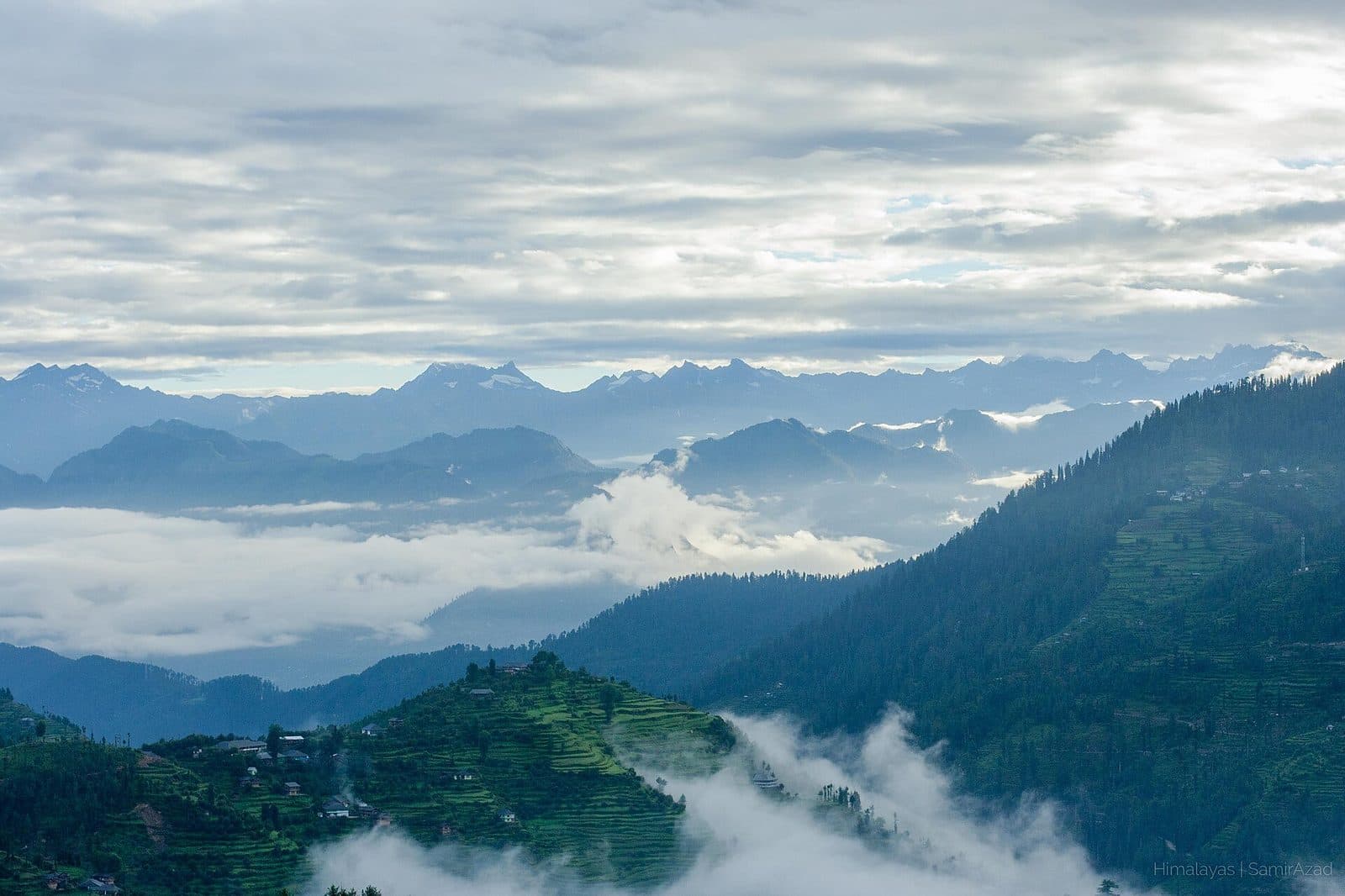
A twelve-year-old ruined my week in the best way. We were doing buoyancy, and Kirti, back-bench, sharpest question in the room, raised her hand: "Ma'am, then why does the island in Parashar Lake move? What pushes it?"
I gave the correct answer: a floating mat of vegetation and peat, wind-driven, density lower than water. She looked at me the way twelve-year-olds look at adults reading from the box, and said her grandmother says the island visits every corner of the lake once a year, because the rishi likes to inspect his whole house.
I drove up the next Saturday, telling myself it was for a photo to use in class.
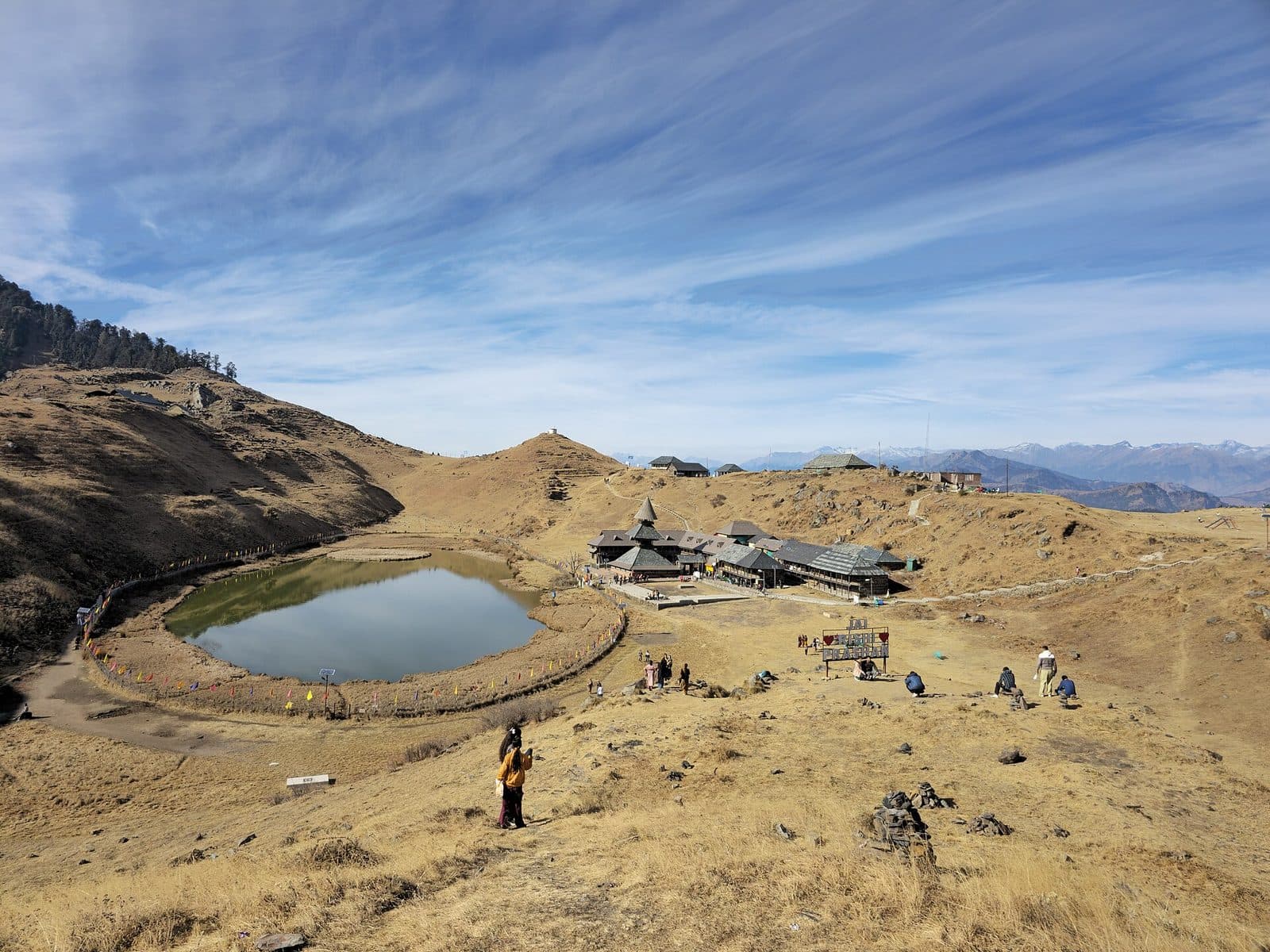
The lake sits at 2,700 metres in a bowl of meadow, and the pagoda temple beside it is carved from deodar that has outlasted every syllabus ever printed. And there it was: the island. A round green raft, maybe fifteen metres across, sitting off the north shore like a thought the water was still having.
I did my measurements, mentally: wind direction, drift, plausible mass. Then the temple's old pujari came out, and I made the mistake, the wonderful mistake, of interviewing him. How deep is the lake, uncle? "Koi nahi jaanta." Nobody knows. Divers have tried, he said, and given up. What anchors the island? Nothing, he said, and that is the teaching: "Jo bandha nahi hai, woh khota bhi nahi." What is not tied cannot be lost.
I stood there with my physics and my phone, out-argued.
Here is what I have accepted: both answers are true, and only one of them fits on a blackboard. Peat mats drift; that is mechanism. But a village that has watched one small island wander one small lake for five hundred years and concluded that untethered things are not lost things, that is data too, of a kind my curriculum has no column for.
I showed my class the video on Monday. Kirti watched the island drift and said, satisfied, "Grandmother was right." So was Archimedes, I said. We agreed to enter both in the record.
Go before the snow closes the road, walk up from Baggi if your legs allow, and take a twelve-year-old if you can borrow one. They ask the lake the right things.