
Kamrunag – The Lake of Oaths
A high lake in Mandi where gold, silver and coins have been offered for generations and never taken back out. What the offerings mean, what the new road changed, and how to stand at that water without getting in the way.
Promise gently; water remembers more than we do.
The Journey
There is a bank in the mountains of Mandi that has never been robbed. Its vault is a lake.
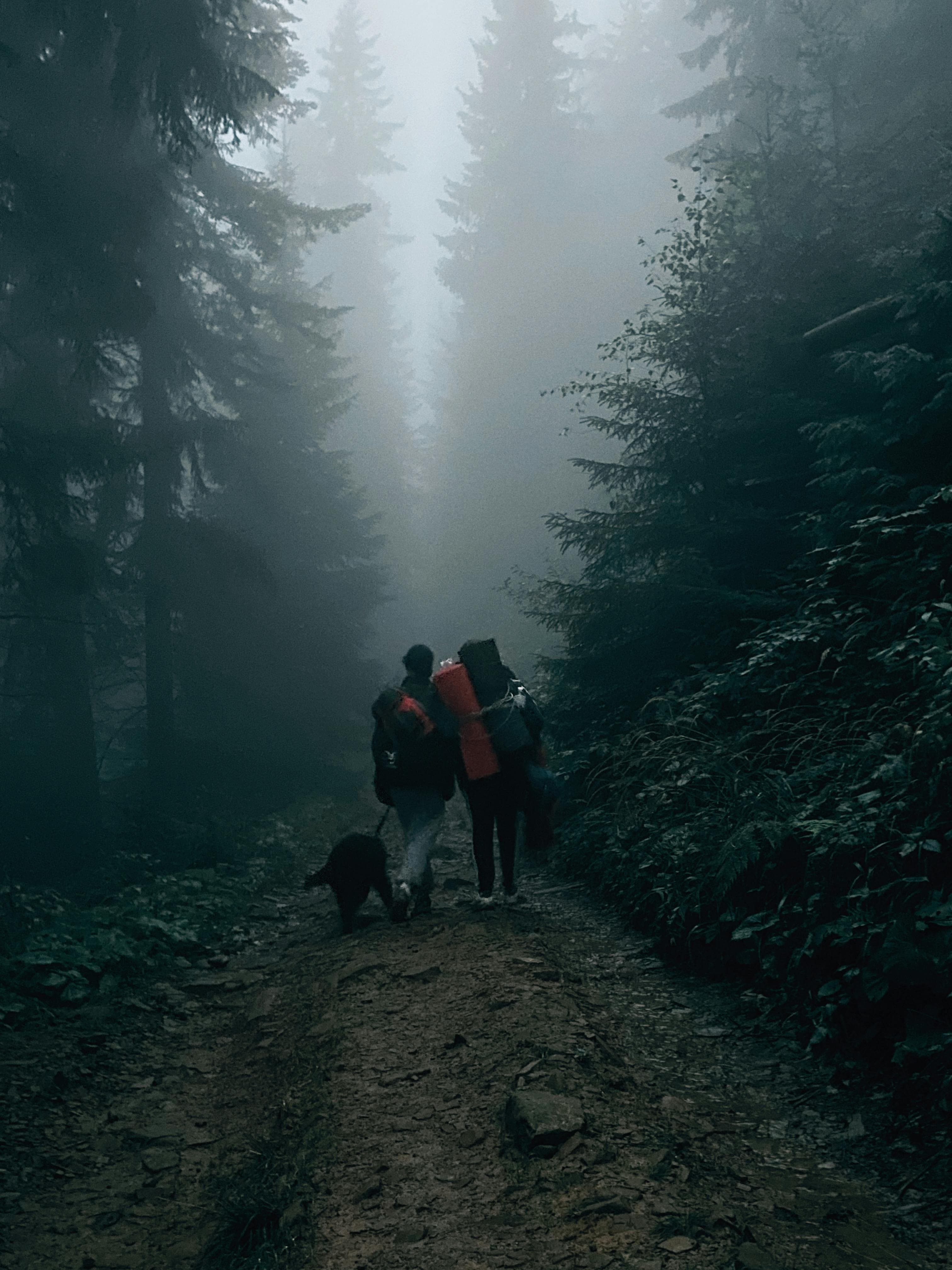
The climb from Rohanda is all deodar, the tall silence of a forest that has been holy longer than it has been mapped. We walked behind a family carrying sweets and a red cloth, and the grandmother set the pace, which is the correct pace.
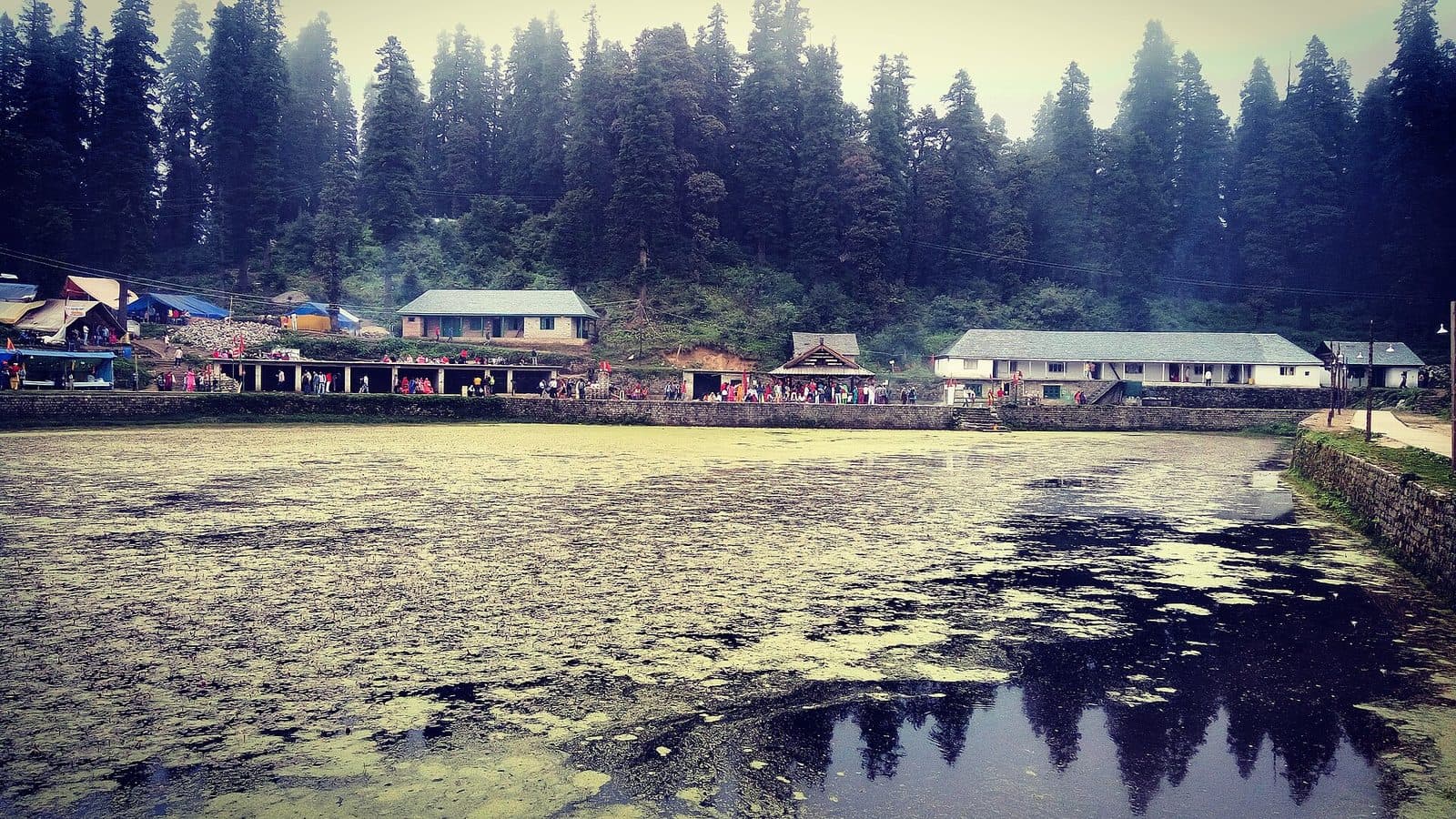
At the top, the water is dark and small and completely certain of itself. People come here to promise things to Dev Kamrunag and seal the promise with a coin thrown into the lake. Gold too, sometimes. The Mandi district administration's own tourism page records that tradition of offering gold, silver and coins on the fulfilment of a wish, and says the quantity at the bottom cannot be estimated. Nobody takes it out.
I asked a shopkeeper at the tea stall why nobody dives for it. He didn't laugh. He just said, "Woh unka hai." It is his. The subject was closed, gently, the way you close a door on a sleeping child.
That sentence is the entire economics of this lake. When the Times of India reported from the June 2015 fair, devotees described the same arrangement in plainer language: three days of offerings, notes and jewellery included, gathered up and immersed in the water rather than deposited anywhere. Devotees quoted in that report said they had never heard of a theft there, and that currency floating on the surface is an ordinary sight. We have not found any published measurement of the lake's depth.
What has changed is the walking. For most of its history Kamrunag was earned on foot. The Tribune reported that a 16 km road was built from Shala panchayat up to the boundary of the temple premises under the Gohar block, an initiative of Raj Kumar, the former Shala gram panchayat pradhan and now its vice-pradhan, built with MGNREGA funds, part of it metalled and much of it still muddy. Kahan Singh, president of the Kamrunag temple committee, told the same paper that tourist numbers rose after the road came, that the committee began running a langar, a community kitchen, from 23 April, and that local shopkeepers had not been allowed to set up stalls on the temple premises in order to maintain cleanliness.
Read that last part twice before you come. The reason the committee gave was cleanliness, and the rule falls on local shopkeepers first. A visitor who arrives with a speaker, a picnic and a bag of wrappers is undoing a rule the community applied to its own people before anyone applied it to guests.
Local truth: make no promise here you do not intend to keep. Read from outside, the custom looks less like superstition and more like contract law, older than paper. That is our reading of it, not the temple's word for it. The second half of that law is the part nobody writes on a signboard. The water gives nothing back. Not a coin, not a photograph you were asked not to take, not a bottle left for someone else to carry down.
The forest is not backdrop either. A 2018 study in the Journal of Non-Timber Forest Products recorded 249 economically important plant species from 74 families and 168 genera in the Kamrunag sacred grove and its surroundings, 165 of them medicinal, and four species endemic to the Indian Himalayan region. The district page calls the cover deodar; the field botanist writing in Hill Post described the stand around the lake as fir, spruce, yew, kail pine, brown oak and maple. Both descriptions are of the same walk from different eyes. The Himachal Pradesh State Biodiversity Board has since begun the process of declaring the Kamrunag lake area a biodiversity heritage site. Its project coordinator, Dr ML Thakur, told The Tribune that a meeting on it was held at Kandhi-Kamru panchayat with officers from the forest and revenue departments, biodiversity management committee members, gram panchayats, kardaars of Kamru-Nag and local knowledgeable persons. The 2018 study already calls it a sacred grove. It carried that name long before a board took an interest in it.
Come in mid-June and you will not be alone. The Tribune's account of the Saranahuli fair describes deities from surrounding villages gathering at the temple premises with folk music and chanting, devotees walking parikrama around the lake, and Natti danced on the ridge. That is the fullest version of this place and also the one in which a visitor is most easily in the way. The Times of India, reporting from the 2015 fair, noted that animal sacrifice had earlier been part of the three-day fair and did not take place that year, after the Himachal Pradesh High Court's ban. We have not asked anyone at Kamrunag what that change has meant, and it is not a visitor's subject to raise at the water's edge.
October is the other answer. The same lake, the same stone idol, nobody's voice on the ridge but your own, and the Dhauladhar clean across the north.
Practical respect looks like this. Carry your rubbish down, all of it, including what you find. Stay out of the water. Ask before photographing people, rituals or the temple interior, and leave the drone at home. If the langar is running, eat only when you are offered and sit where you are shown. If you are visiting in late June or early July, check with the temple committee first, because the premises have been closed for the lake's cleaning in the past.
I threw no coin. I wasn't ready. The lake respected that, and so did I.
Sources for this chapter
- Mandi District Administration, Himachal Pradesh — Kamrunag Lake, official tourist place page
- The Tribune — Road metalled, devotees to gain easy access to Kamrunag temple in Mandi
- The Tribune — Saranahuli fair kicks off in Mandi's Kamrunag and Prashar Lake areas
- The Tribune — Kamrunag lake area in Himachal's Mandi set to be biodiversity heritage site
- The Times of India — Kamrunag lake where offerings are deposited for centuries
- Hindustan Times — Himachal lake adjoining temple to be cleaned (temple official Vishnu Thakur, IANS)
- Kumari, Samant, Kumar, Puri and Singh (2018), Assessment of economically important floristic diversity of Kamrunag Sacred Grove and surroundings in Himachal Pradesh, Journal of Non-Timber Forest Products 25(3):145-160
- Hill Post — Kamru Nag trek through the eyes of a field botanist
Practical Information
Nearest airport: Bhuntar (Kullu). Nearest broad-gauge railhead: Chandigarh; Joginder Nagar on the narrow gauge. Reach Mandi town first. From Mandi it is about 47 km by road to Rohanda, the usual trailhead, or about 35 km from Sundernagar, per the district tourism page. From Rohanda the path climbs roughly 6 km through forest to the lake and temple, three to four hours at an unhurried pace on the district's own reckoning. Start early. Most people who walk up go back down the same day. We have not found established visitor accommodation at the lake itself, so plan your descent before you plan your photographs, and ask in Rohanda if you intend to stay near the ridge. There is now a way in that does not involve walking. The Tribune reported a 16 km road from Shala panchayat to the boundary of the temple premises, built under the Gohar block, part of it metalled and much of it still muddy. That road makes the lake reachable for elderly pilgrims and for people who cannot walk three hours uphill, which is a real gain. If you are able to walk, walk. The path is the older half of the visit. Walk slowly whichever way you come. This is a pilgrim path before it is a trek, and the etiquette of the path matters more than your pace.
Questions Yatris Ask
Related Chapters

Saroa to Kamrunag Lake
From village slopes to a lake of oaths, the path feels like memory carried well.

Parashar Lake Trek
Cedar paths to a high lake that keeps a floating island. Simple, beautiful, remembered.

Chandernahan Lake Trek
Snow basins and long light. The climb is patient; the view is a careful kindness.
Himachal Temple Etiquette
Footwear, photography, dress, and what to do when a devta's palki meets you on the trail. How to enter a Himachali temple as a guest, not an audience.
Related Places
Saroa to Kamrunag Lake
From village slopes to a lake of oaths, the path feels like memory carried well.
Parashar Lake Trek
Cedar paths to a high lake that keeps a floating island. Simple, beautiful, remembered.
Chandernahan Lake Trek
Snow basins and long light. The climb is patient; the view is a careful kindness.
Himachal Temple Etiquette
Footwear, photography, dress, and what to do when a devta's palki meets you on the trail. How to enter a Himachali temple as a guest, not an audience.

“Promise gently. Water remembers more than we do.”
Walk this chapter with awareness
Rohanda, Mandi District is a living landscape of villages, shrines, forests, and weather that turns quickly. Move softly, ask before you photograph faces or temples, support local homes, and carry back everything you carry in. The mountain remembers a respectful guest.
Read the Yatri CodeThe Himalayas are not asking to be visited.They ask to be understood.
Learn the trail, its people, and its silences before you set out, then walk this chapter with awareness.