
Himachal Temple Etiquette
Footwear, photography, dress, and what to do when a devta's palki meets you on the trail. How to enter a Himachali temple as a guest, not an audience.
Some doors open for you. It is still someone else's house.
The Journey
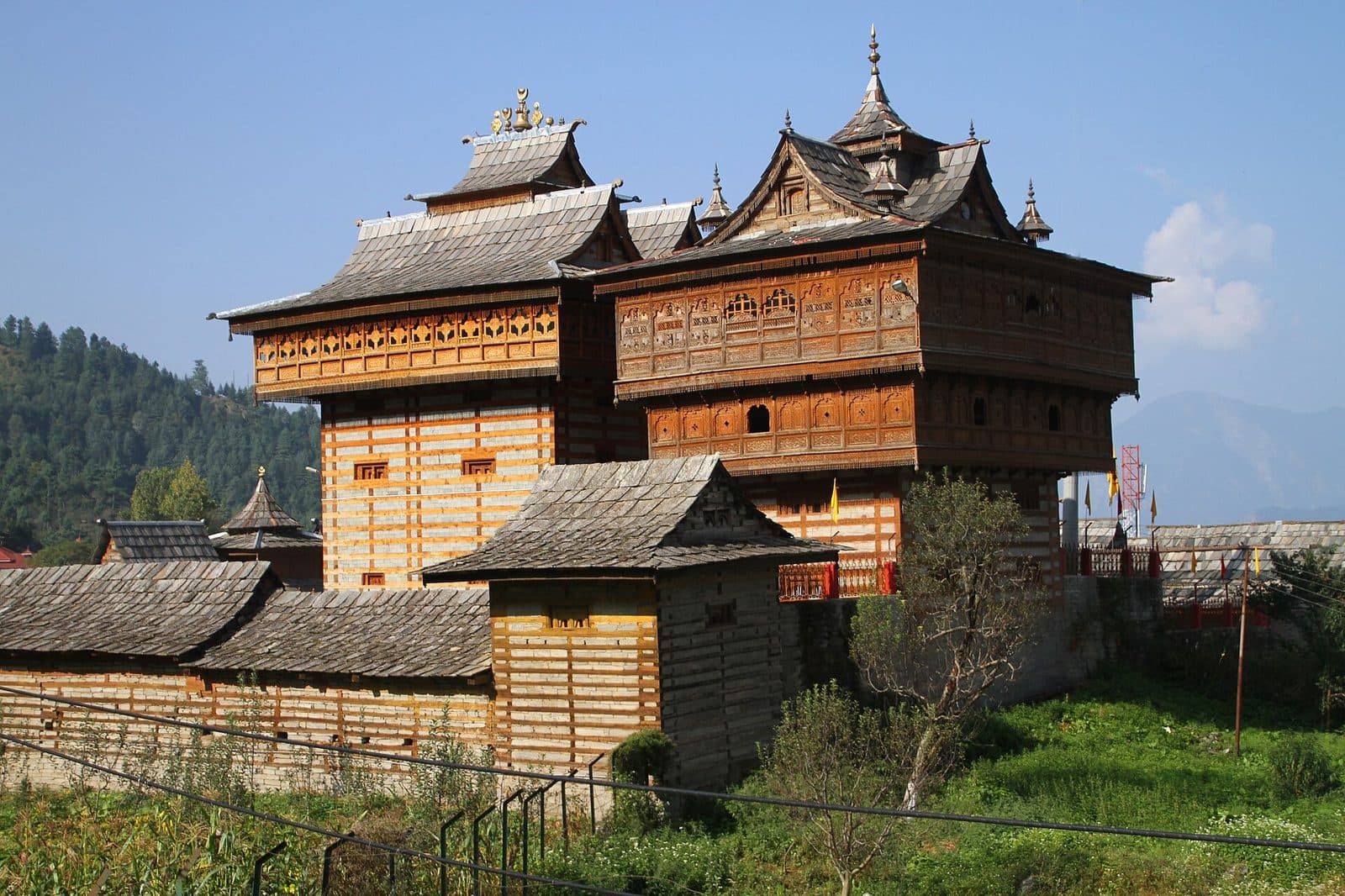
In much of Himachal, the local deity is not a symbol. Local accounts describe villages consulting their devta before weddings, harvests and building work, and in some valleys before going to court. So when you step into a temple courtyard here, you are not entering a monument. You are entering somebody's house, during working hours, unannounced.
This is the etiquette page that sits under our sacred chapters — Kamrunag, Shikari Devi, Churdhar, Parashar. It is general guidance for temples and devsthans, the seats of local deities, across Himachal. It cannot be a rulebook, and any page claiming to be one is overselling itself. Rules here are set per deity, per temple committee, per valley, and a rule that holds absolutely at one shrine may not exist at the next ridge. What travels everywhere is the method: watch, ask, wait. Nothing on this page overrides what a person at the temple tells you.
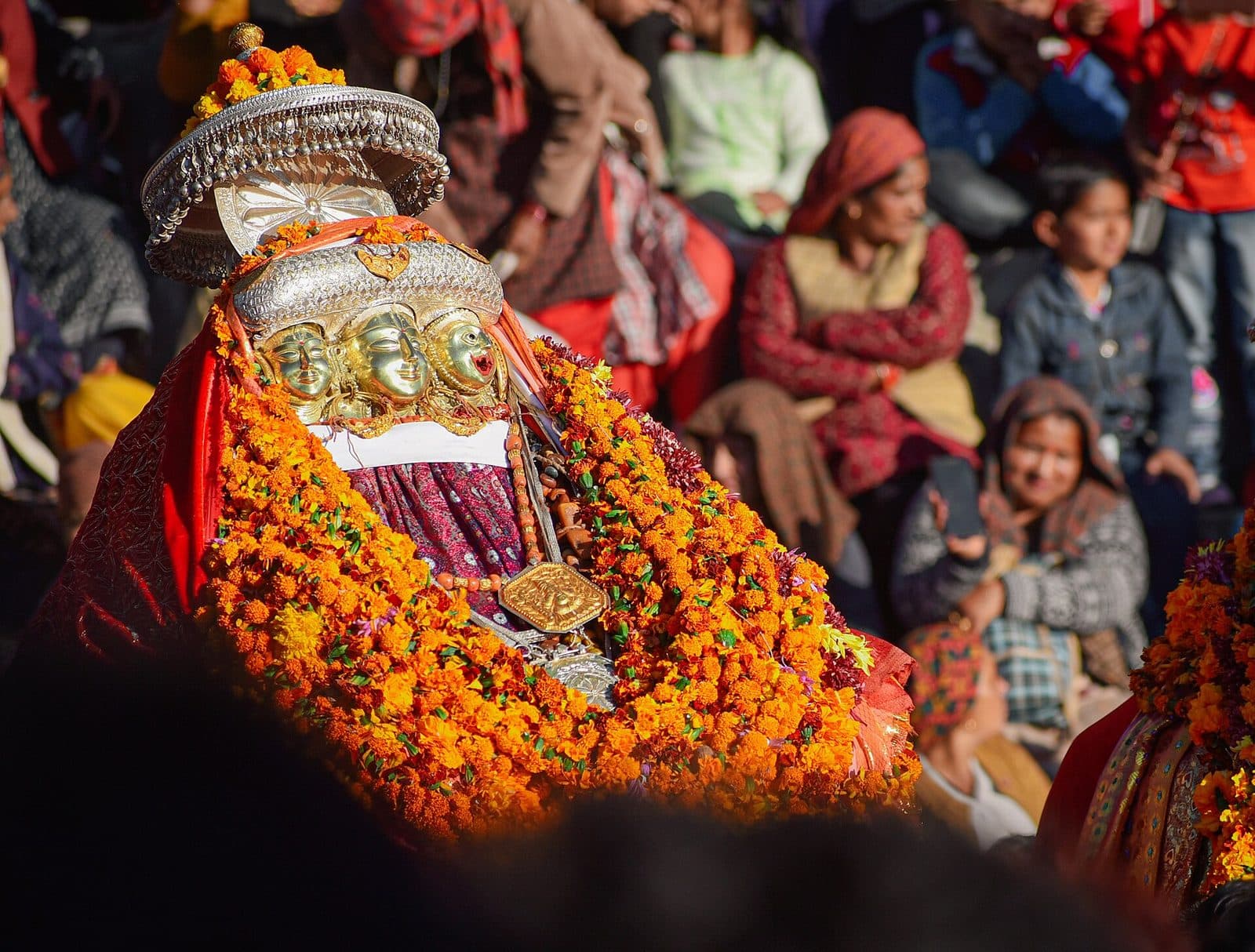
Learn one word first: devta, or devi. Around the deity sit named roles — a pujari for ritual, a kardar who manages the deity's affairs and property, bajantris who play the deity's music, and in many places a gur, understood locally as the medium through whom the deity speaks. At fairs and processions the deity travels on a rath or palki, a palanquin carried on shoulders, often carrying mohras, metal faces of the deity. These are working positions held by real people. If you need permission for anything — a photograph, entry to an inner courtyard, attending a ritual — one of them is who you ask. Not the nearest shopkeeper, not your driver.
Ethnographic work on Kullu and the western Himalaya describes disputes that could go to a court being brought to the deity first, with the answer carrying real social weight — land, debts, marriages, quarrels between families. Local accounts say the same. That is the local truth under all the etiquette below: you are not being asked to respect a belief you may not share. You are standing in front of an institution the village still answers to, and behaving accordingly costs you nothing.
Start with your feet. Shoes come off earlier than most visitors expect. The reliable signal is the pile of chappals already there: stop where they stop. At some shrines that line is the outer gate or a marked stone rather than the sanctum door. Leather is refused at some shrines altogether, which catches people out at the belt, the wallet and the camera strap, so on a temple day a cloth belt and leaving the leather in the car saves an awkward conversation at the door.
Then keep your hands to yourself. The safest assumption in a devta temple is that you may not touch anything: not the deity, not the palanquin, not the mohras, not the drums, not somebody else's offering. At many temples these are handled only by the pujari and the deity's office-holders — local accounts describe devotees not touching them either. Visitors take darshan from the door. Photography is the rule visitors worry about. Touching is the one we would be more careful with.
On photography, the working assumption is no until someone says yes. Local accounts describe photography of the deity, the mohras and the sanctum being restricted at many devta temples; some restrict the entire precinct; some are relaxed about the building and firm about the ritual. Some post a sign. Many don't, and the absence of a sign is not permission. Ask once, in words, and accept the answer without negotiating. If a gur is present or a ritual is underway, put the phone away before anyone has to ask you. And leave the drone in the bag — over a temple, a procession or a fair it is intrusive in a way obvious to everyone standing underneath it.
Dress plainly and cover shoulders and knees, men and women both. A shawl or a big scarf is the single most useful thing to carry: it covers shoulders, covers a head where head-covering is expected, and doubles as warmth at altitude, since many of the shrines in this book sit above 2,500 metres and make their own weather. Some temples have additional requests — a covered head, a removed upper garment, no leather. If one applies to you it will usually be said at the door. Being told is not a rebuke. It is how anyone, local or not, finds out.
Sooner or later you will meet a deity on the road. A palki coming down a trail with drums behind it is not a photo opportunity that has arrived; it is traffic with right of way. Stop, step off the path, stand still, let it pass. Do not walk through the procession. Do not cut across in front of the palanquin to shoot it from the other side. Do not try to overtake it on a narrow section. Where the trail allows it, step to the hill side rather than the drop side — the bearers are carrying real weight on a bad surface and need the whole width; that is trail safety, not ritual. In a vehicle, pull over and wait. Standing quietly with your hands at your sides is generally understood; nobody expects a visitor to perform devotion they don't feel.
The fairs are where all of this becomes visible, and also where it is most misread. Deities gather, drums run for hours, and the nati circles open in the ground. It looks like a festival anyone can join, and the hospitality is genuine enough that you will probably be fed by someone who has never met you. But the parts that look like performance mostly are not, and a crowd is not consent to film. Watch from the edge, which is where most people are standing anyway. If you are pulled into the circle, that is an invitation; don't manufacture one.
A few practicalities. Alcohol, tobacco and non-vegetarian food are kept out of many temple precincts, and some deities' areas carry further prohibitions a visitor has no way of deducing — a particular food, a material, an animal product. This is the strongest argument for asking rather than guessing. Small village shrines often have no fixed hours and are opened by the pujari for morning and evening worship, so an afternoon arrival can find a locked door and nothing wrong with it. The deity may also simply be away: palanquins travel to fairs and to other deities, and local accounts describe a temple being effectively shut while its devta is in another valley. If your visit depends on a specific ritual or fair, confirm the date locally in the week before — these follow local calendars, not the Gregorian one.
Offerings are simple. Use the donation box rather than handing money to anyone, keep the amount unremarkable, and never try to pay your way past a restriction. If prasad is put into your hands, take it with the right hand and eat it.
If you remember nothing else, remember the two-minute rule. Stand still at the edge of the courtyard for two minutes before you do anything at all. Watch where the shoes stop, where people stop walking forward, who touches what, where the phones are and are not. Then copy the grandmother in front of you. She has done this ten thousand times and she is not going to get it wrong.
Questions Yatris Ask
Related Chapters
Kamrunag – The Lake of Oaths
A high lake in Mandi where gold, silver and coins have been offered for generations and never taken back out. What the offerings mean, what the new road changed, and how to stand at that water without getting in the way.

Devidarh to Shikari Devi
The day climbs gently to a sacred summit. Bells and wind keep company.

Churdhar Sacred Ascent Trek
The trail carries temple bells and cedar breath. At the summit, the sky feels near enough to greet.

Parashar Lake Trek
Cedar paths to a high lake that keeps a floating island. Simple, beautiful, remembered.
Stories from This Chapter
Related Places
Kamrunag – The Lake of Oaths
A high lake in Mandi where gold, silver and coins have been offered for generations and never taken back out. What the offerings mean, what the new road changed, and how to stand at that water without getting in the way.
Devidarh to Shikari Devi
The day climbs gently to a sacred summit. Bells and wind keep company.
Churdhar Sacred Ascent Trek
The trail carries temple bells and cedar breath. At the summit, the sky feels near enough to greet.
Parashar Lake Trek
Cedar paths to a high lake that keeps a floating island. Simple, beautiful, remembered.
“A temple in Himachal is not a monument you have arrived at. It is a house you have been let into.”
Walk this chapter with awareness
Himachal Pradesh is a living landscape of villages, shrines, forests, and weather that turns quickly. Move softly, ask before you photograph faces or temples, support local homes, and carry back everything you carry in. The mountain remembers a respectful guest.
Read the Yatri CodeThe Himalayas are not asking to be visited.They ask to be understood.
Learn the trail, its people, and its silences before you set out, then walk this chapter with awareness.