
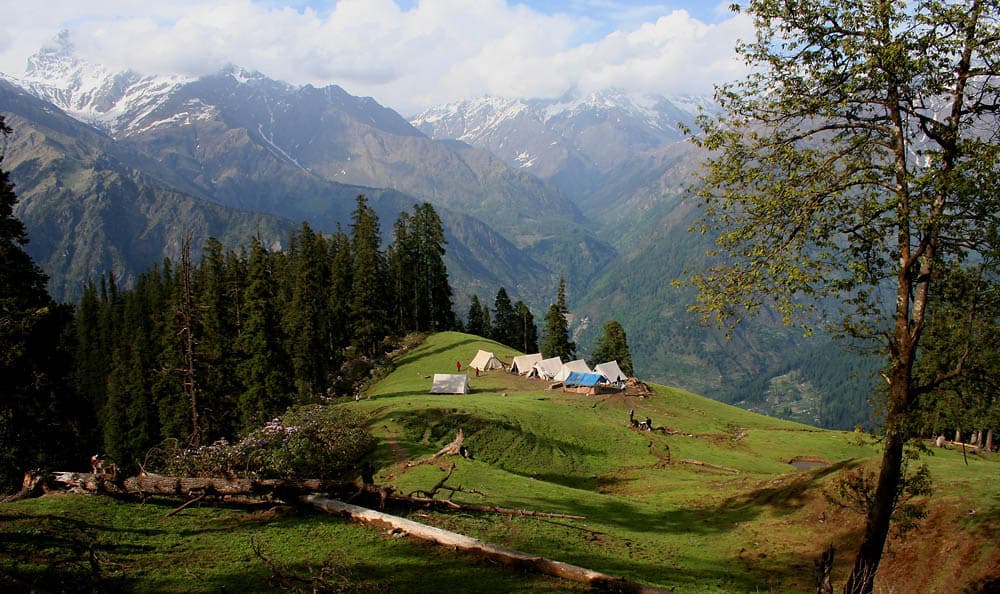
Biskeri Thach: Meadows Above the Forest
Biskeri Thach holds the quieter half of a Sar Pass journey: the descent, the camp and the work of leaving a meadow ready for whoever comes next.
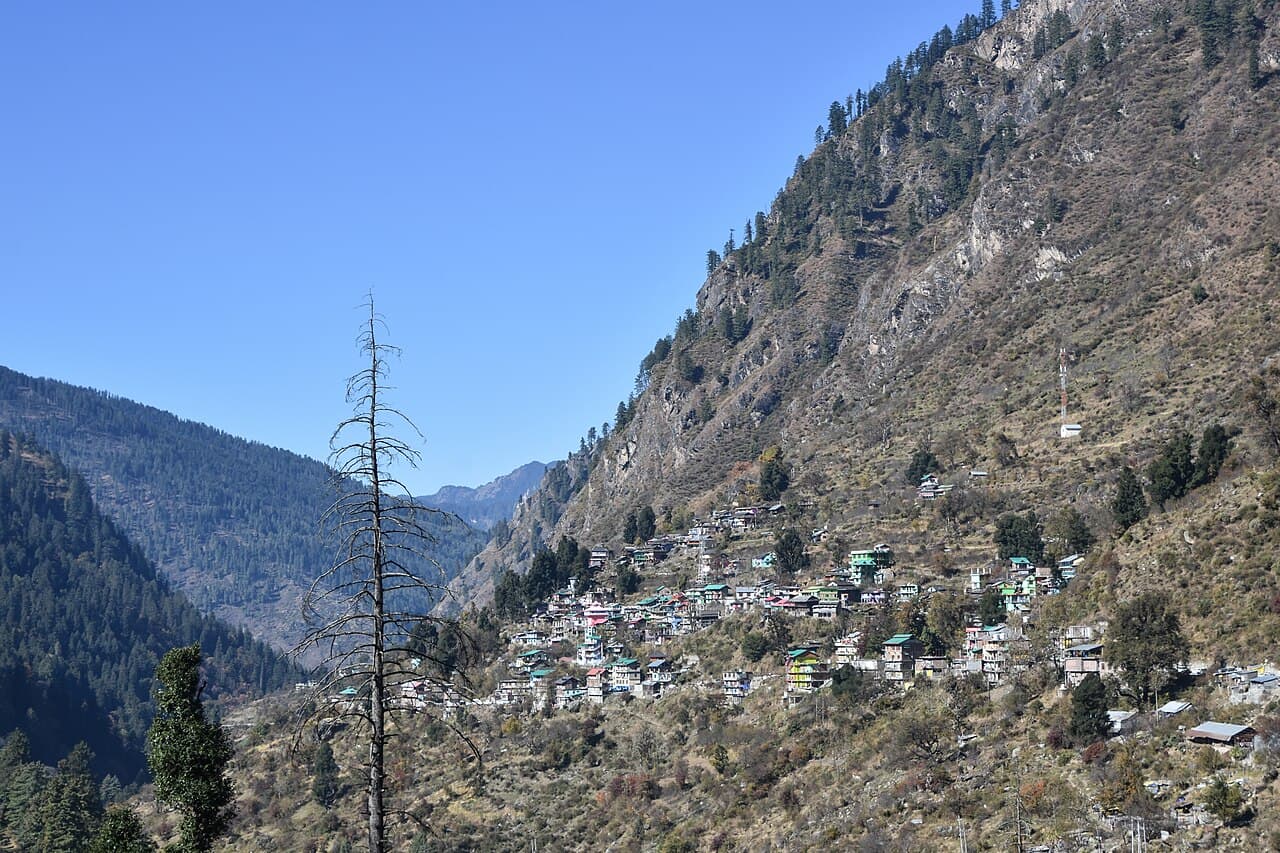
Photo: J.M.Garg / CC BY-SA 3.0 via Wikimedia Commons; displayed cropped
The pass gets the photograph. The meadow gives the day somewhere to land.
The Journey
A pass is easy to place at the centre of a story. It has a height, a crossing and a photograph that seems to explain the effort. A meadow asks for a different ending. At Biskeri Thach, the interesting question is what happens after the moment a traveller expected to remember most.
Biskeri sits on the descent side of a commonly used Sar Pass route. Bikat places its campsite at approximately 3,400 metres, after the crossing from Nagaru, with the onward descent passing through forest towards Pulga and Barshaini. That gives this meadow a place in the book: between the exposed mountain journey and the return to villages.
The alpine skyline can make a campsite appear small and temporary. That is a useful correction to the importance we sometimes give our own arrival. A tent is a brief arrangement in a much larger landscape. Its occupant will go home; the ground has to carry the consequences of how it was used.
The local perspective begins with a question about that ground. Which areas must remain clear? Are livestock moving through? Where should a group collect water, and where must it never wash? Mountain meadows can be working spaces as well as places of rest. The sources used here do not establish a named shepherd community, an ancient Biskeri route or a customary right to pitch a tent anywhere. Those stories should come from people willing and entitled to tell them.
Camping culture is made from ordinary decisions. Keep a bag from spreading into the path. Give the person preparing food room to work. Agree a quiet hour without waiting for someone else to ask. The most generous person in a camp may be the one who notices a task before it needs announcing. This is editorial reflection, not a borrowed memory presented as a field diary.
Slow travel here does not mean adding unplanned nights. It means allowing the descent to be part of the experience, and allowing the group leader to adjust the day. The legs that carried someone over a pass still have to carry them downhill. Reaching a greener place does not end the need for careful footing or attention to weather.
Before departure, ask the organiser to explain camp permissions, toilets, water treatment, waste removal and the plan if someone cannot continue. A cheap tent listing cannot answer those questions by itself. If Biskeri is the main purpose of your journey rather than one stop on Sar Pass, arrange that approach explicitly; a full circuit itinerary is not a reliable set of directions for a separate meadow visit.
Leave the meadow without trenches, fire scars or food scraps. Give animals room, keep soap out of streams and take every piece of packaging away. The lasting pleasure of Biskeri is not ownership of a patch of grass. It is the possibility of having rested there without making the next arrival inherit your carelessness.
Sources for this chapter
Practical Information
Commonly visited after Sar Pass, followed by a descent towards Pulga and Barshaini. Arrange a guide and confirm the specific route, camp permission and current trail conditions. Do not treat a meadow visit as an unplanned day trip from Kasol.
Questions Yatris Ask
Related Chapters
Sar Pass, The Trek That Connects Generations
Sar Pass is the introduction most trekkers get to serious Himalayan altitude, and it happens to pass directly through two other chapters in this book.
Grahan, A Village That Protects Its Traditions
A nine kilometre climb from Kasol leads to a village that runs on its own rules, kept not by law but by a shared decision the community has held onto for generations.
Pulga, Forests, Waterfalls and Silence
Three kilometres from Barshaini, across a river, through what locals call the Fairy Forest. Pulga is close enough to Kasol to visit for an afternoon and far enough in spirit that most people forget to leave.
Barshaini: Where the Road Gives Way to the Valley
Barshaini is more than a transfer point. It is where the valley asks you to exchange the certainty of a road for the attention a village path deserves.
Related Places
Sar Pass, The Trek That Connects Generations
Sar Pass is the introduction most trekkers get to serious Himalayan altitude, and it happens to pass directly through two other chapters in this book.
Grahan, A Village That Protects Its Traditions
A nine kilometre climb from Kasol leads to a village that runs on its own rules, kept not by law but by a shared decision the community has held onto for generations.
Pulga, Forests, Waterfalls and Silence
Three kilometres from Barshaini, across a river, through what locals call the Fairy Forest. Pulga is close enough to Kasol to visit for an afternoon and far enough in spirit that most people forget to leave.
Barshaini: Where the Road Gives Way to the Valley
Barshaini is more than a transfer point. It is where the valley asks you to exchange the certainty of a road for the attention a village path deserves.
Walk this chapter with awareness
Biskeri Thach, Parvati Valley, Kullu, Himachal Pradesh is a living landscape of villages, shrines, forests, and weather that turns quickly. Move softly, ask before you photograph faces or temples, support local homes, and carry back everything you carry in. The mountain remembers a respectful guest.
Read the Yatri CodeThe Himalayas are not asking to be visited.They ask to be understood.
Learn the trail, its people, and its silences before you set out, then walk this chapter with awareness.