
Parvati Valley, Beyond Kasol
Villages, trails, people and stories beyond the famous gateway. Kasol is not Parvati Valley. It is only where the valley starts, and this book follows what comes after.
Villages, trails, people and stories beyond the famous gateway. Kasol is not Parvati Valley. It is only where the valley starts, and this book follows what comes after.
The Invitation
Kasol is a gateway, not a summary. The places gathered here ask to be read one by one.
Table of Contents
The reading order connects places and themes; it is not a continuous trekking route.
Part I — Where the Valley Opens
- Parvati Valley
Understanding Parvati Valley
An opening to Parvati Valley through Kasol, Manikaran and the distinct settlements and routes gathered in this book.
- Kasol
Kasol: A Gateway with Its Own History
Kasol became a familiar gateway to Parvati Valley through decades of travel and tourism. Its history is one chapter in a region of distinct places.
- Manikaran, Parvati Valley
Manikaran: Hot Springs and Pilgrimage Traditions
Manikaran's hot springs draw Hindu and Sikh pilgrims. Government information records the site's geography and pilgrimage context; devotional accounts preserve distinct traditions about its meaning.
- Chalal, Parvati Valley
Chalal: A Field Note
Existing published material is too limited to support a detailed history or current access guide to Chalal. This field note keeps those gaps visible.
Part II — Villages and Neighbourhoods
- Rasol, Parvati Valley
Rasol, The Remote Mountain Village
Rasol sits high above Chalal, reached by a genuinely demanding climb, and rewards the effort with wooden houses that have stood far longer than the trend that now brings visitors to see them.
- Grahan, Parvati Valley
Grahan, A Village That Protects Its Traditions
A nine kilometre climb from Kasol leads to a village that runs on its own rules, kept not by law but by a shared decision the community has held onto for generations.
- Kalga, Parvati Valley
Kalga, Apple Orchards and Slow Mountain Life
No road reaches Kalga. That single fact organises everything else about it, from its economy to the pace at which travellers who arrive here tend to leave.
- Pulga, Parvati Valley
Pulga, Forests, Waterfalls and Silence
Three kilometres from Barshaini, across a river, through what locals call the Fairy Forest. Pulga is close enough to Kasol to visit for an afternoon and far enough in spirit that most people forget to leave.
- Tulga, Parvati Valley
Tulga, The Forgotten Neighbour
Tulga sits between Kalga and Pulga, sharing their geography without sharing their fame. This chapter says plainly what is known and what is not, rather than inventing a history to fill the gap.
- Tosh, Parvati Valley
Tosh, The Village Above the Valley
Tosh is the last village the Parvati valley offers before the trails take over entirely. Its fame arrived faster than its infrastructure, and both facts matter to anyone visiting now.
- Malana, Parvati Valley
Malana, Between Myth and Reality
Malana is one of the most mythologised villages in the Himalayas, and also one of the most real, currently working through pressures that have nothing to do with the legends attached to it.
Part III — Walking the Upper Valley
- Parvati Valley
Kheer Ganga + Buni Buni Pass
Forest ascents to a sacred pool, then onward to a humble ridge. Since 2024, the overnight version of this trip no longer legally exists.
- Bunbuni Pass, Parvati Valley
Bunbuni Pass, The Trail Beyond Kheerganga
Bunbuni Pass starts from Kalga and climbs to nearly 11,000 feet, offering the same Parvati valley wilderness as Kheerganga with a fraction of its foot traffic.
- Waichin Valley, Parvati Valley
Waichin Valley, The High Meadow
Waichin Valley begins near the Malana Dam and climbs into remote green meadows most trekking itineraries skip entirely.
Part IV — High Country and Watershed
- Sar Pass, Parvati Valley
Sar Pass, The Trek That Connects Generations
Sar Pass is the introduction most trekkers get to serious Himalayan altitude, and it happens to pass directly through two other chapters in this book.
- Mantalai, Parvati Valley
Mantalai Lake, Where the Parvati River Begins
Mantalai Lake sits far past Kheerganga, the source of the Parvati river and, in local tradition, the place where a much longer meditation than most stories admit actually took place.
Further Journeys
Related reading beyond the main 16-chapter sequence.
- Barshaini, Parvati Valley, Kullu, Himachal PradeshBarshaini: Where the Road Gives Way to the Valley
- Kutla, Tosh Valley, Kullu, Himachal PradeshKutla: The Quiet Trail Beyond Tosh
- Biskeri Thach, Parvati Valley, Kullu, Himachal PradeshBiskeri Thach: Meadows Above the Forest
- Parvati Valley, Kullu, Himachal PradeshDevta Trails of Parvati Valley: Walking as a Guest
- Pin Parvati Pass, Kullu–Spiti divide, Himachal PradeshPin Parvati Pass: Where Parvati Valley Meets Spiti
Cover photograph
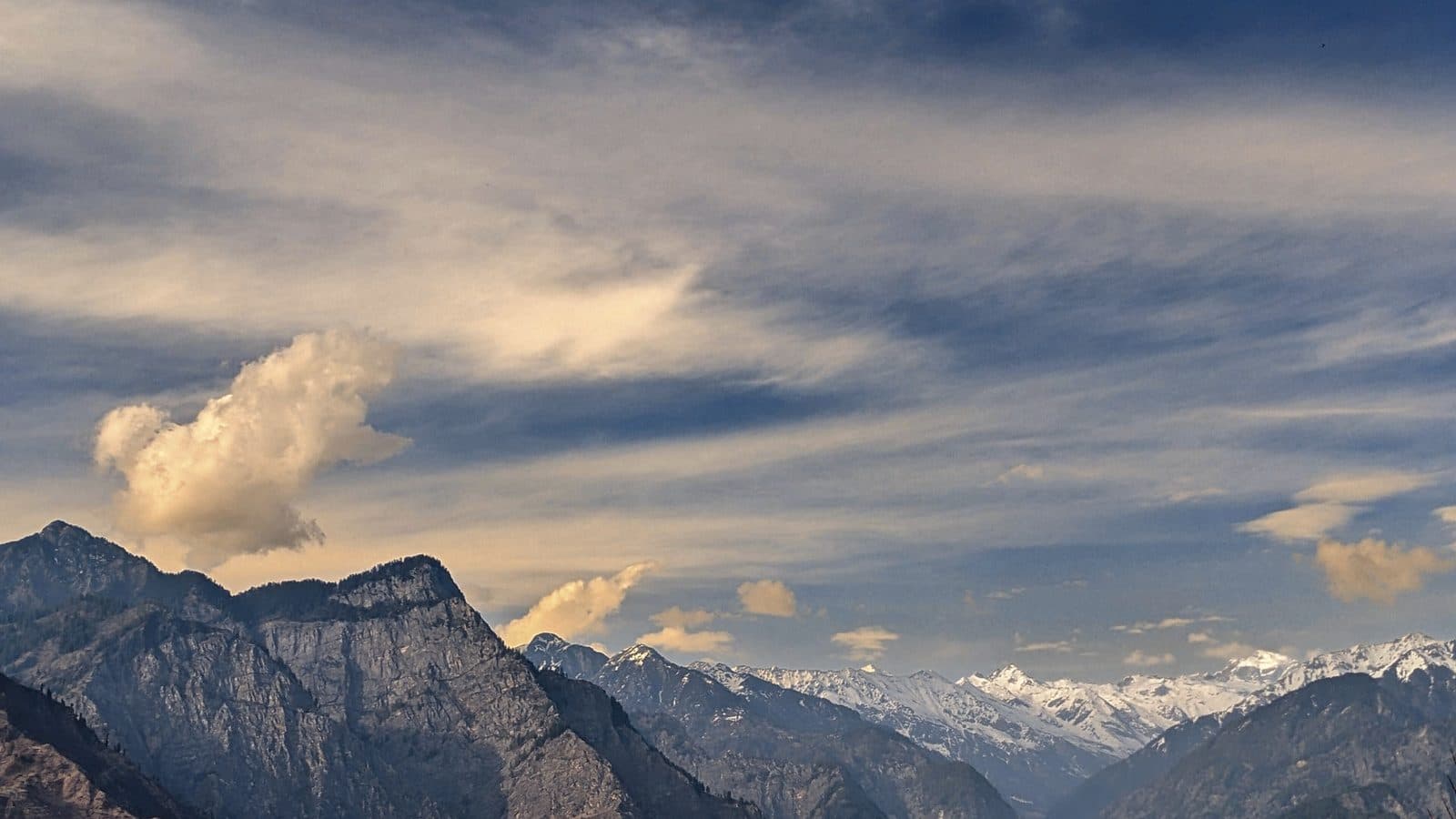
The Parvati Valley seen from Ratocha village. Methemfetamine / CC BY 3.0 via Wikimedia Commons. Displayed with a responsive crop. Photograph source. Licence terms.
"Read the valley slowly. The mountains keep their own time."